Ash Wednesday
Ash Wednesday Masses and Ashes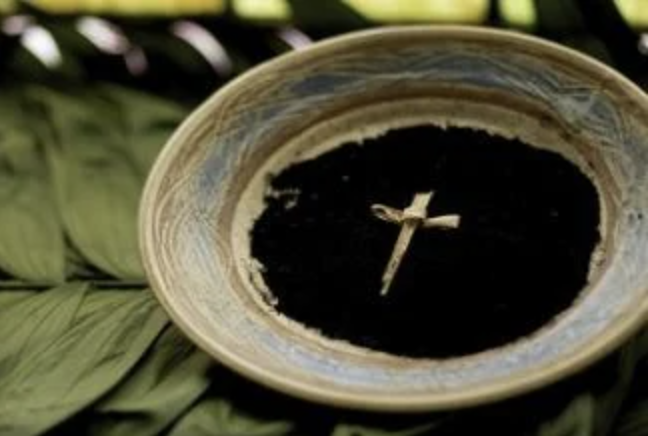
February 18, 2026
8:00 AM - Mass
4:00 PM - Service of the Word
6:00 PM - Mass
9:00 AM - 3:00 PM - Ash Distribution in the Chapel
The Meaning of the Ashes
Ash Wednesday marks the beginning of the 40 days of Lent, a sacred season of prayer, fasting, and almsgiving (acts of charity) as we prepare our hearts for Easter.On Ash Wednesday, Catholics gather for Mass and the distribution of ashes. During this ancient ritual, ashes are placed on our foreheads in the shape of a cross as a reminder of our human frailty and our need for God’s mercy. As the ashes are given, we hear the words, "Remember that you are dust, and to dust you shall return," or "Repend, and believe in the Gospel." These words call us to humility, repentance, and renewal.A Day of Fasting
Ash Wednesday is a day of fasting (one full meal and two smaller meals) and abstinence from meat for Catholics 14 and older. Exceptions for those who are ill, pregnant and nursing mothers. Fasting lasts from midnight to midnight on Ash Wednesday.
The History
by Mr. Sean Eshaghy, 7th Grade Teacher, St. Josaphat SchoolAsh Wednesday and the marking of our foreheads at the beginning of the Lenten season has a long and varied history. Let’s break down this practice to understand how it came about.
According to the Church, the ashes themselves hold two specific meanings.
First, they represent our mortality and lowliness next to God. This concept is reinforced when the ashes are applied to the head and the phrase, “Remember that you are dust, and to dust, you shall return,” is spoken. These words are drawn directly from Genesis 3:19, which recounts how God created us from the dust of the earth and emphasizes our lives on earth are temporary.
Secondly, the ashes recreate the ancient tradition of wearing sackcloth, a rough and scratchy material, and covering yourself in ashes when you are in great distress or demonstrating the admittance of sin and a desire to repent. This specific act of contrition is mentioned several times in the Bible, including in the books of Job, Ester, Samuel, Isaiah, and Jeremiah, to name a few.
So, where did the modern Catholic practice of marking the beginning of Lent with ashes on our foreheads come from?
The first documented mention of the 'Day of Ashes' or 'Dies Cinerum' in Latin comes from the Roman Missal in the earliest existing copies of the Gregorian Sacramentary. The concept originated by the Roman Catholics somewhere in the 6th century. Though the exact origin of the day is not clear, the custom of marking the head with ashes is said to have originated during the papacy of Gregory the Great (590-604). However, ashes were not distributed to the general public at this time.
Initially, wearing ashes as a sign of penance was a matter of private devotion. Later it became part of the official rite for reconciling public penitents or criminals. In this context, ashes sprinkled over a person's head served as a motive for fellow Christians to pray for the returning sinner and to feel sympathy for them.
Eventually, ashes were adapted to mark the beginning of Lent. The “Day of Ashes” in Latin ritual is found in the earliest editions of the Gregorian Sacramentary, which dates at least to the 8th century. Still, at this time, the practice was reserved for the clergy and high-ranking officials.
Things began to change in about the year 1000 when an Anglo-Saxon priest named Aelfric began to advocate for broader use of the practice. “In the books both in the Old Law and in the Ne,” he argued, “Men who repented of their sins bestrewed themselves with ashes and clothed their bodies with sackcloth. Now let us do this little at the beginning of our Lent that we strew ashes upon our heads to signify that we ought to repent of our sins during the Lenten fast.” Aelfric reinforced his point by telling the story of a man who refused to go to Church on Ash Wednesday and receive ashes; the man was killed a few days later in a boar hunt.
Alelfric must have been convincing. The practice of marking our foreheads with a cross of ashes to mark the start of Lent became universal under Pope Urban II following the Synod of Benevento in 1091. Thus, since the Middle Ages, the Church has used ashes to mark the beginning of the penitential season of Lent, when we remember our mortality and mourn for our sins.
In our present liturgy for Ash Wednesday, we use ashes made from the burned palm branches distributed on the Palm Sunday of the previous year. When we begin the holy season of Lent in preparation for Easter, we must remember the significance of the ashes we have received. We are called to turn our hearts to the Lord who suffered, died, and rose for our salvation, and we renew the promises made at our baptism.
Fun Fact: Initially, the Greek letter "chi" (X for Christ) was marked on the forehead rather than a traditional cross.
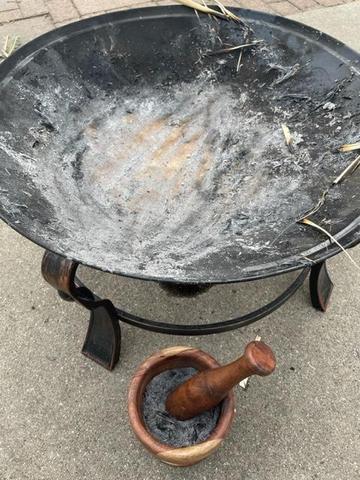
After burning the palms, the ashes are collected.

Ashes are ground into a fine powder and sprinkled with holy water.